Arc A580 vs Arc A750
The Arc A750 is a real step up in speed — leading the Arc A580 by roughly 13% in our performance index. It also comes out ahead on value, making it the straightforward pick if the price fits your budget.
Maximum Capacity Reached. Remove a model to add another. (2/2)
Arc A750 vs Arc A580: In-Depth Breakdown
Performance: Arc A750 vs Arc A580
The Arc A750 is noticeably faster, around 13% ahead of the Arc A580. Both cards sit in the same broad class, well suited to 1080p. The Arc A750 packs 3,584 shading units versus 3,072 on the Arc A580. The Arc A750 also has more RT cores (28 vs 24) and more AI cores (448 vs 384), strengthening its ray-tracing and AI-upscaling performance.
Price & Value
On price, expect to pay $951 AED for the Arc A750 versus $1,078 AED for the Arc A580. Because it's both faster and competitively priced, the Arc A750 wins on performance-per-dollar by about 27%. The Arc A750 still sits about $662 AED above its $289 AED MSRP. The Arc A580 still sits about $899 AED above its $179 AED MSRP.
Power & Efficiency
The Arc A580 draws just 175W versus 225W for the Arc A750, and it also delivers more performance per watt — so it runs cooler and quieter and needs less PSU headroom.
Which should you buy: Arc A580 or Arc A750?
The Arc A750 is the all-round winner here — it's faster and the better value, so buy it if it fits your budget. Only consider the Arc A580 if you find it at a steep discount.
Frequently Asked Questions
Is the Arc A750 better than the Arc A580?
Which is better for 4K gaming, the Arc A580 or the Arc A750?
Is the Arc A580 worth the extra $126 AED over the Arc A750?
Which is better for ray tracing, the Arc A750 or the Arc A580?
Which should you buy: Arc A580 or Arc A750?
Technical Specifications Comparison
Architecture & Cores
| Specification | Arc A580 | Arc A750 |
|---|---|---|
| Architecture | Alchemist | Alchemist |
| Process Node | TSMC N6 | TSMC N6 |
| CUDA Cores (Shading Units / Shading Units) | 3,072 | 3,584✓ |
| Ray Tracing Cores | 24 | 28✓ |
| Tensor / AI Cores | 384 | 448✓ |
Clock Speeds
| Specification | Arc A580 | Arc A750 |
|---|---|---|
| Base Clock | 1,700 MHz | 2,050 MHz✓ |
| Boost Clock | 2,000 MHz | 2,400 MHz✓ |
Memory
| Specification | Arc A580 | Arc A750 |
|---|---|---|
| VRAM Capacity | 8 GB | 8 GB |
| Memory Type | GDDR6 | GDDR6 |
| Memory Bus | 256-bit | 256-bit |
| Memory Speed | 16 Gbps | 16 Gbps |
| Bandwidth | 512 GB/s | 512 GB/s |
Connectivity & Power
| Specification | Arc A580 | Arc A750 |
|---|---|---|
| Interface | PCIe 4.0 x16 | PCIe 4.0 x16 |
| TDP | 175 W✓ | 225 W |
| Power Connectors | 2x 8-pin | 2x 8-pin |
| Released | Oct 2023 | Oct 2022 |
Related Reading
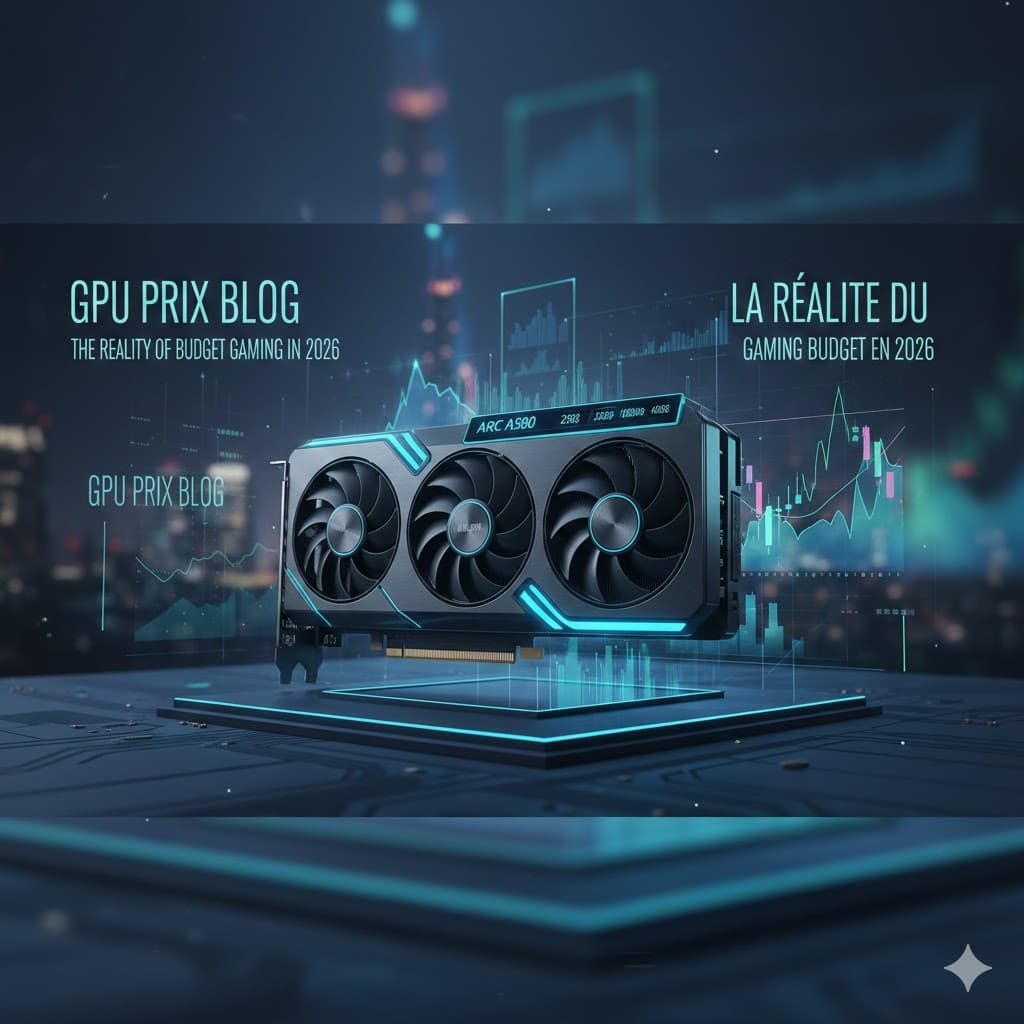
Intel Arc A580: The Reality of Budget Gaming in 2026
Between aggressive price cuts and the arrival of the Battlemage generation, is the Arc A580 still a realistic choice for 1080p gaming?

Intel Arc Alchemist in 2026: Is a Used A580, A750 or A770 Still Worth Buying?
Every Arc Alchemist card is discontinued, and Battlemage replaced them. So what does a used A580, A750 or A770 still buy you — and at what price does it beat a new Arc B580? An honest retrospective on Intel's first discrete GPUs.

Intel Arc A770 in 2026: The Used-Market 16GB Card — What Still Works, and What Still Breaks
The A770 is discontinued Alchemist silicon with a 16GB frame buffer and a 256-bit bus. Four years of driver work fixed a lot — and left some things broken. An honest read on who should buy one used, and who absolutely should not.