GeForce RTX 4060 vs Radeon RX 5700 XT
The GeForce RTX 4060 is a real step up in speed — leading the Radeon RX 5700 XT by roughly 11% in our performance index.
Maximum Capacity Reached. Remove a model to add another. (2/2)
GeForce RTX 4060 vs Radeon RX 5700 XT: In-Depth Breakdown
Performance: GeForce RTX 4060 vs Radeon RX 5700 XT
The GeForce RTX 4060 is noticeably faster, around 11% ahead of the Radeon RX 5700 XT. Both cards sit in the same broad class, well suited to 1080p.
Power & Efficiency
The GeForce RTX 4060 draws just 115W versus 225W for the Radeon RX 5700 XT, and it also delivers more performance per watt — so it runs cooler and quieter and needs less PSU headroom. Its more modern Ada Lovelace architecture on a TSMC N4 process is part of why it does more with each watt.
Generation & Longevity
The GeForce RTX 4060 is roughly 4 years newer than the Radeon RX 5700 XT (Ada Lovelace vs RDNA), so it generally benefits from a more modern architecture and longer driver-support runway.
Features & Ecosystem
Beyond raw numbers, the GeForce RTX 4060 brings NVIDIA DLSS upscaling/frame generation and stronger ray tracing, while the Radeon RX 5700 XT offers AMD FSR upscaling and strong rasterization value. If you lean on upscaling or ray tracing, that ecosystem difference can matter as much as the frame-rate gap.
Which should you buy: GeForce RTX 4060 or Radeon RX 5700 XT?
The GeForce RTX 4060 is the faster card by about 11%. With live pricing limited for this pair, base your decision on the spec differences above — particularly VRAM and power draw — and check current stock before buying.
Frequently Asked Questions
Is the GeForce RTX 4060 better than the Radeon RX 5700 XT?
Which is better for 4K gaming, the GeForce RTX 4060 or the Radeon RX 5700 XT?
Which should you buy: GeForce RTX 4060 or Radeon RX 5700 XT?
Technical Specifications Comparison
Architecture & Cores
| Specification | GeForce RTX 4060 | Radeon RX 5700 XT |
|---|---|---|
| Architecture | Ada Lovelace | RDNA |
| Process Node | TSMC N4 | TSMC N7 |
| CUDA Cores (CUDA Cores / Stream Processors) | 3,072✓ | 2,560 |
| Ray Tracing Cores | 24 | — |
| Tensor / AI Cores | 96 | — |
Clock Speeds
| Specification | GeForce RTX 4060 | Radeon RX 5700 XT |
|---|---|---|
| Base Clock | 1,830 MHz✓ | 1,605 MHz |
| Boost Clock | 2,460 MHz✓ | 1,905 MHz |
Memory
| Specification | GeForce RTX 4060 | Radeon RX 5700 XT |
|---|---|---|
| VRAM Capacity | 8 GB | 8 GB |
| Memory Type | GDDR6 | GDDR6 |
| Memory Bus | 128-bit | 256-bit✓ |
| Memory Speed | 17 Gbps✓ | 14 Gbps |
| Bandwidth | 272 GB/s | 448 GB/s✓ |
Connectivity & Power
| Specification | GeForce RTX 4060 | Radeon RX 5700 XT |
|---|---|---|
| Interface | PCIe 4.0 x8 | PCIe 4.0 x16 |
| TDP | 115 W✓ | 225 W |
| Power Connectors | 1x 8-pin | 1x 8-pin + 1x 6-pin |
| Released | Jun 2023 | Jul 2019 |
Related Reading
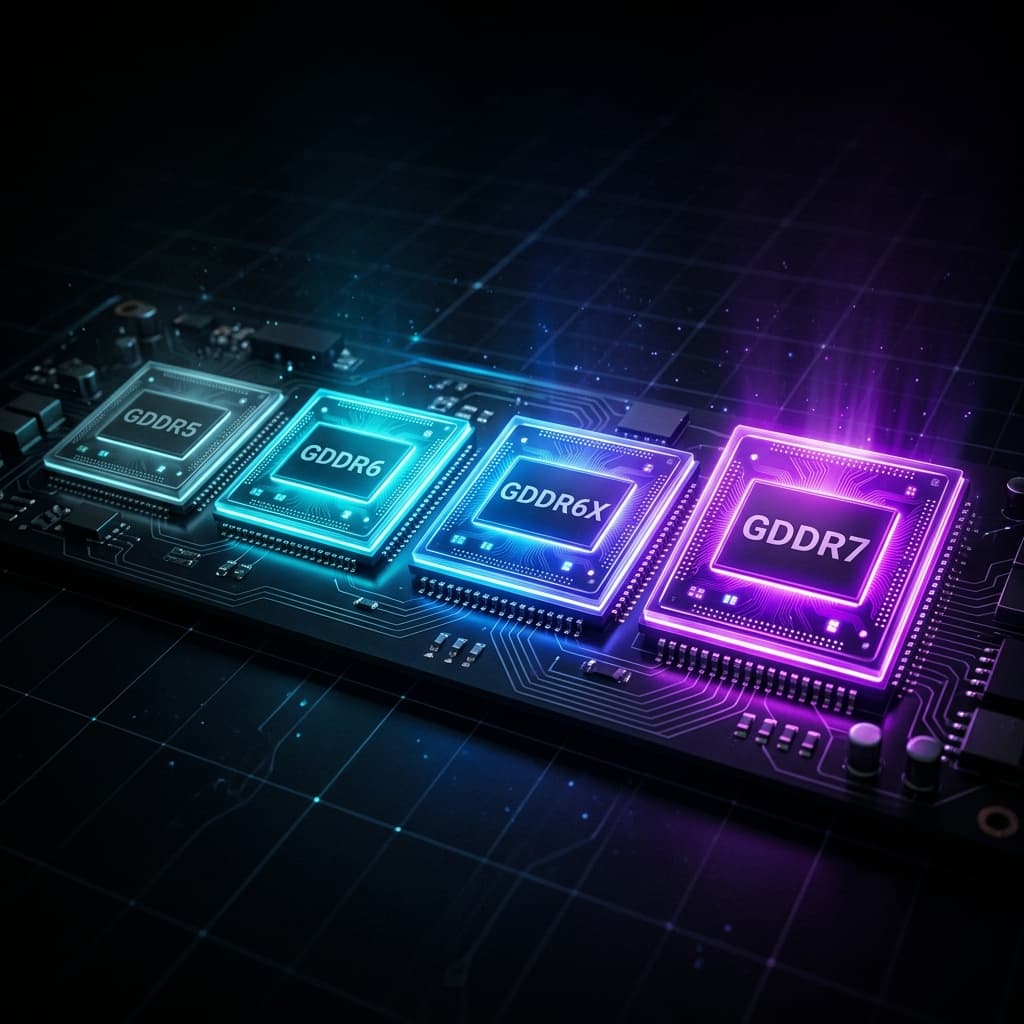
GDDR5 vs GDDR6 vs GDDR6X vs GDDR7: Which VRAM Generation Actually Matters for Your GPU?
Not all VRAM is created equal. GDDR5, GDDR6, GDDR6X, GDDR7 — we break down what each generation actually delivers in bandwidth, power, and real-world impact so you can stop guessing and start buying smarter.
The 1080p Value Champion: AMD Radeon RX 7600 Review
In a market dominated by high-priced flagships, the Radeon RX 7600 remains a steadfast hero for 1080p gamers. Is it still the best value pick?
Intel Arc A580: The Reality of Budget Gaming in 2026
Between aggressive price cuts and the arrival of the Battlemage generation, is the Arc A580 still a realistic choice for 1080p gaming?