GPU Comparison
Select up to 2 GPUs to analyze their pricing, performance, and specifications side-by-side.
Market Value Leader
Market comparison is currently pending while we verify the latest benchmarks for GeForce RTX 4080 and Radeon RX 7900M.
The GeForce RTX 4080 is dramatically faster than the Radeon RX 7900M, leading by roughly 53% in our performance index.
Maximum Capacity Reached. Remove a model to add another. (2/2)
Comparable or lower specs
GeForce RTX 4080 vs Radeon RX 7900M: In-Depth Breakdown
Performance: GeForce RTX 4080 vs Radeon RX 7900M
The GeForce RTX 4080 is dramatically faster, around 53% ahead of the Radeon RX 7900M. That gap is enough to move it up a tier: the GeForce RTX 4080 is comfortable at 4K with upscaling and native 1440p, while the Radeon RX 7900M is better matched to 1440p.
Power & Efficiency
The Radeon RX 7900M draws just 180W versus 320W for the GeForce RTX 4080, and it also delivers more performance per watt — so it runs cooler and quieter and needs less PSU headroom. Its more modern RDNA 3 architecture on a TSMC N5 process is part of why it does more with each watt.
Features & Ecosystem
Beyond raw numbers, the GeForce RTX 4080 brings NVIDIA DLSS upscaling/frame generation and stronger ray tracing, while the Radeon RX 7900M offers AMD FSR upscaling and strong rasterization value. If you lean on upscaling or ray tracing, that ecosystem difference can matter as much as the frame-rate gap.
Which should you buy: GeForce RTX 4080 or Radeon RX 7900M?
The GeForce RTX 4080 is the faster card by about 53%. With live pricing limited for this pair, base your decision on the spec differences above — particularly VRAM and power draw — and check current stock before buying.
Frequently Asked Questions
Is the GeForce RTX 4080 better than the Radeon RX 7900M?
Which is better for 4K gaming, the GeForce RTX 4080 or the Radeon RX 7900M?
Technical Specifications Comparison
Architecture & Cores
| Specification | GeForce RTX 4080 | Radeon RX 7900M |
|---|---|---|
| Architecture | Ada Lovelace | RDNA 3 |
| Process Node | TSMC 4N | TSMC N5 |
| CUDA Cores (CUDA Cores / Stream Processors) | 9,728✓ | 4,608 |
| Ray Tracing Cores | 76✓ | 72 |
| Tensor / AI Cores | 304✓ | 144 |
Clock Speeds
| Specification | GeForce RTX 4080 | Radeon RX 7900M |
|---|---|---|
| Base Clock | 2,205 MHz✓ | 1,825 MHz |
| Boost Clock | 2,505 MHz✓ | 2,090 MHz |
Memory
| Specification | GeForce RTX 4080 | Radeon RX 7900M |
|---|---|---|
| VRAM Capacity | 16 GB | 16 GB |
| Memory Type | GDDR6X | GDDR6 |
| Memory Bus | 256-bit | 256-bit |
| Memory Speed | 22.4 Gbps✓ | 18 Gbps |
| Bandwidth | 716.8 GB/s✓ | 576 GB/s |
Connectivity & Power
| Specification | GeForce RTX 4080 | Radeon RX 7900M |
|---|---|---|
| Interface | PCIe 4.0 x16 | PCIe 4.0 x16 |
| TDP | 320 W | 180 W✓ |
| Power Connectors | 1x 16-pin | None |
| Released | Sep 2022 | Oct 2023 |
Related Reading
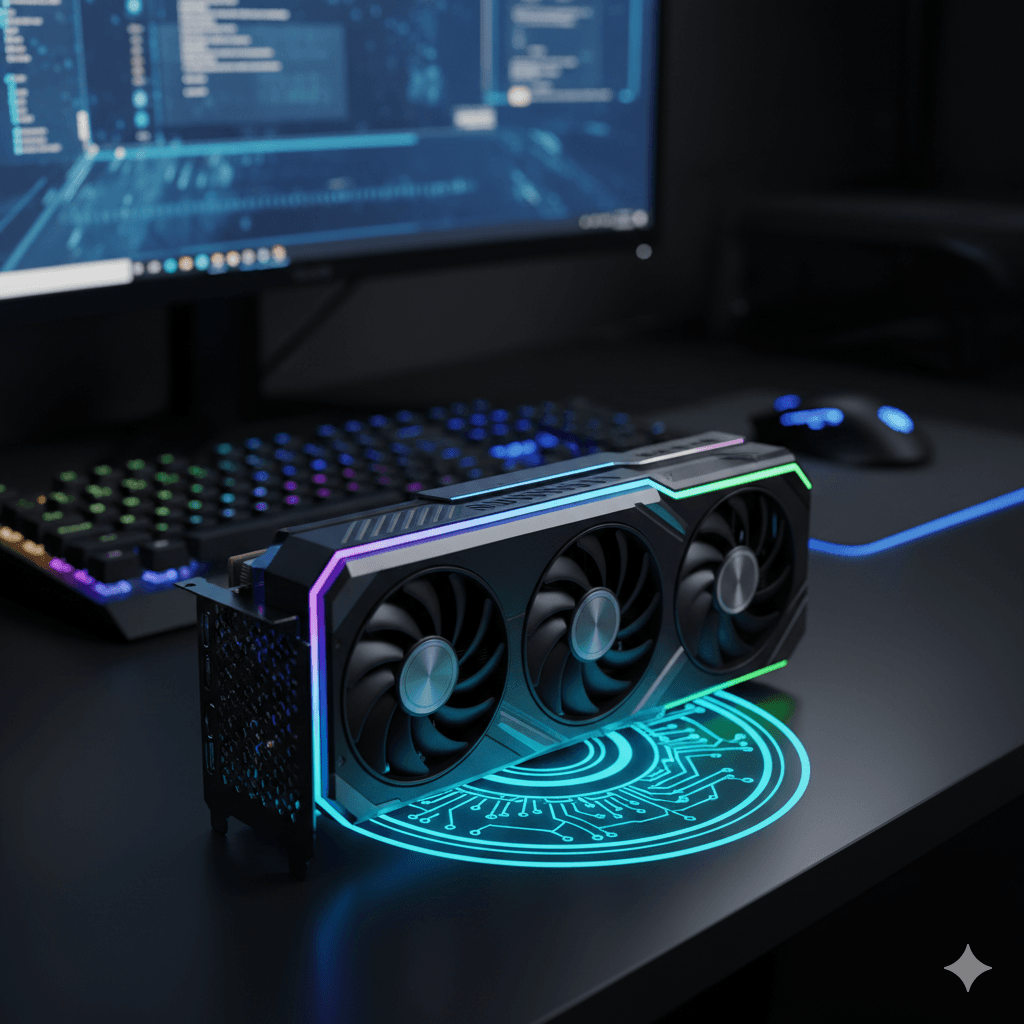
The Ultimate 1440p Powerhouse: NVIDIA GeForce RTX 4080
In 2026, the RTX 4080 has found its sweet spot. Is this former 4K titan the ultimate high-refresh 1440p card for today's market?

Best for: The 4K Texture Modder & Raw Power Enthusiast
Modded Skyrim and Starfield at 4K can exceed 18GB of VRAM usage. Discover why the 7900 XT's 20GB buffer is a necessity.